
Introduction
On social media, almost every scroll brings a new prediction about love, money, luck, or destiny. Astrology that once demanded years of study now appears through viral reels, chatbot readings, and confident answers delivered within seconds.
This accessibility is not always harmful. Social media astrology can introduce people to birth charts, planetary cycles, and self-reflection. The danger begins when entertainment is presented as expertise, or when a creator uses fear and urgency to sell expensive solutions.
People who seek guidance during heartbreak, anxiety, or uncertainty may be especially vulnerable. A fake astrologer can exploit that emotional state through frightening predictions, fabricated authority, and repeated demands for payment.
The problem is therefore not astrology itself. It is the growing difficulty of separating responsible guidance from manipulation, astrology misinformation, and commercial performance.
Astrology as a Commodity
Astrology was traditionally passed from teacher to student and studied through years of observation, calculation, interpretation, and ethical discipline. Today, it is often packaged as a fast digital product.
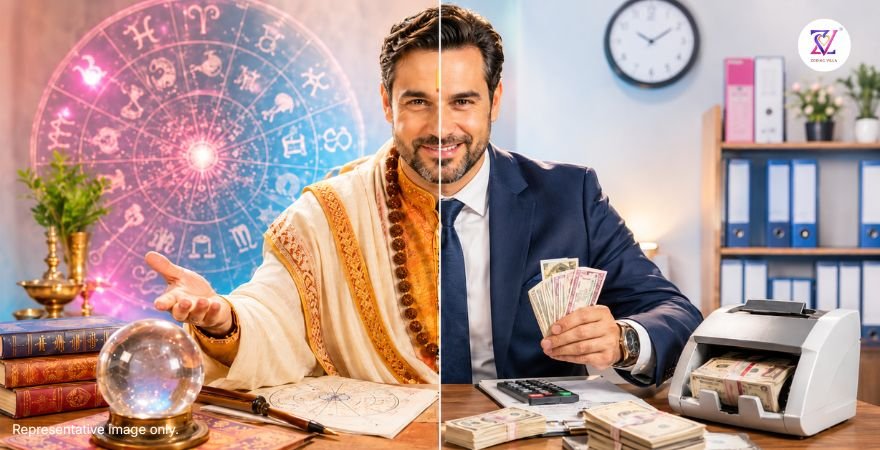
A “personal astrologer” found online may know how to attract attention without knowing how to interpret a complete chart. The service may begin with a free prediction, then move toward urgent warnings, private messages, paid remedies, or claims that only the astrologer can remove an unseen danger.
Reels, AI chat windows, generic horoscope messages, and short videos can make complex interpretations appear simple. Nuance disappears. Fear-based phrases such as “your marriage is doomed” or “a dangerous planetary period has begun” become sales triggers.
This does not mean every paid astrologer or digital platform is dishonest. Professional astrology requires time, skill, and fair compensation. The problem begins when human vulnerability becomes the product.
“Today, astrologers have become entertainers, and entertainers now play astrologers.”

What Is Driving the Astrology Boom
The explosion of these “astrologers” is not accidental. Digital momentum, algorithmic virality, and emotional craving have created a perfect storm.
- In India alone, astrology apps have surged in downloads and ad budgets, plastered across Instagram, YouTube, Snapchat, and OTT platforms. – BMI
- Social media has turned zodiac signs into memes, short daily reels, tarot teasers — and suddenly every creator is an astrologer. – BMI
- Investors are noticing too. The digital astrology market globally is projected to grow from about USD 3 billion in 2024 to USD 9 billion by 2030. – Yahoo Finance
And in India, the online astrology segment is expected to scale tenfold by FY30. – The Economic Times
Young people lead this charge. A recent Times of India article notes how Gen Z is driving AI astrology adoption — because on social media, apps, and chatbots, astrology becomes entertaining, immediate, and self-identity. – The Times of India
When demand is high, supply rushes in — regardless of quality or ethics. So you see offers like “Become a certified astrologer in 7 days crash course program” everywhere. The pitch: get a “Doctorate in Astrology (Gold Medalist)” certificate, become an overnight star. Real skill, years of study? That barely shows in these bootstrap credentials.
Social media loves spectacle. It rewards certainty, fear, and drama. So astrologers who promise “instant solutions,” “doom predictions,” or “love secrets” get traction faster than those who offer nuanced readings. That algorithmic pressure pushes many into exaggeration, fake claims, or outright scam.
Emotional and Financial Consequences
When astrology becomes a tool for manipulation, people can lose far more than money. They may also lose peace, confidence, and trust in their own judgement.
Take the case of a Mumbai techie who sought cosmic solace via an astrology app. What began with a suggestion to pay ₹6,300 for a cleansing ritual spiraled into constant demands, threats, and finally over ₹12.20 lakh lost. – The Times of India
In another story, a 24-year-old woman from Bengaluru was advised an astrological “love cure.” What started as a small payment for a ritual ballooned to nearly ₹6 lakh, with threats and emotional manipulation along the way. – The Economic Times
Sometimes the damage is gold, literally. In Haveri, Karnataka, a young pharmacist trusting an Instagram ad lost ₹15 lakh worth of gold ornaments, convinced they were needed for a ritual to solve her troubles. – The Times of India
Authorities are taking note. In Jaipur, police arrested 30 people for fraudulent astrology services, with over ₹30 crore involved in scams tied to mobile apps and social media. These aren’t isolated stories. They point to systemic danger. – The Times of India
Emotionally, people lose their decision-making power. They stop trusting themselves. Instead, they wait for a “guru’s permission” to live or act. That level of dependency is dangerous.
Why Ethical Voices Must Speak Up
Not all astrologers become predators. But when fake voices dominate the feed, the entire art loses legitimacy. That’s why voices grounded in ethics, depth, and sincerity must stand out — not just for brand but for protection of seekers.
When we expose scams, when we teach discernment, we reclaim astrology’s dignity. We show that charts are not scripts but mirrors. That growth happens in dialogue and reflection, not in fear coercion or instant remedies.
We must highlight red flags: claims of overnight mastery, flashy degrees, phrases like “Gold Medalist Doctorate Astrologer” as marketing tools, rituals demanding your life’s savings, or constant upsell of remedies. We must remind seekers: insight doesn’t need force, growth doesn’t need fear.
We must also push platforms to take responsibility. Social media’s feed algorithms push false prophets because drama drives engagement. We need platforms to penalize people who repeatedly promote scams, to flag ridiculous claims like “7-day certified astrologer degree,” and to require proof or credentials when offering paid spiritual services.
Yes, astrology can heal, guide, uplift — but only when handled with integrity, compassion, and respect for human agency.
How to Recognize Red Flags
- Claims of overnight mastery or extremely short certification programs
- Constant pressure to purchase expensive remedies or rituals
- Predictions that create fear or urgency
- Grand titles such as ‘Gold Medalist Doctorate Astrologer’ used as marketing
- Refusal to explain chart logic or previous prediction history
Astrologer’s Insight
A true astrologer does not need to scare you to sound powerful. Saying, “This relationship will fail” may get attention, but fear is not wisdom. Good astrology should help you understand what is happening, why certain patterns repeat, and what you can do with that awareness. It should open a useful conversation, not make you dependent on predictions. Difficult periods do not always mean disaster, and every challenging transit is not a warning siren. If astrology only leaves you worried, something is missing. A good reading should leave you calmer, clearer, and better prepared to make your own choices.
FAQs
1. How can I tell if an online astrologer is fake?
2. What are the most common astrology scams on social media?
3. Is astrology becoming too commercialized?
4. How can I identify a trustworthy astrologer?
5. Are expensive astrological remedies necessary?
6. What should happen during a personal astrologer consultation?
May the planets favor your path and grace your journey with love, peace, and prosperity.
— Zodiac Villa