

AI Summary
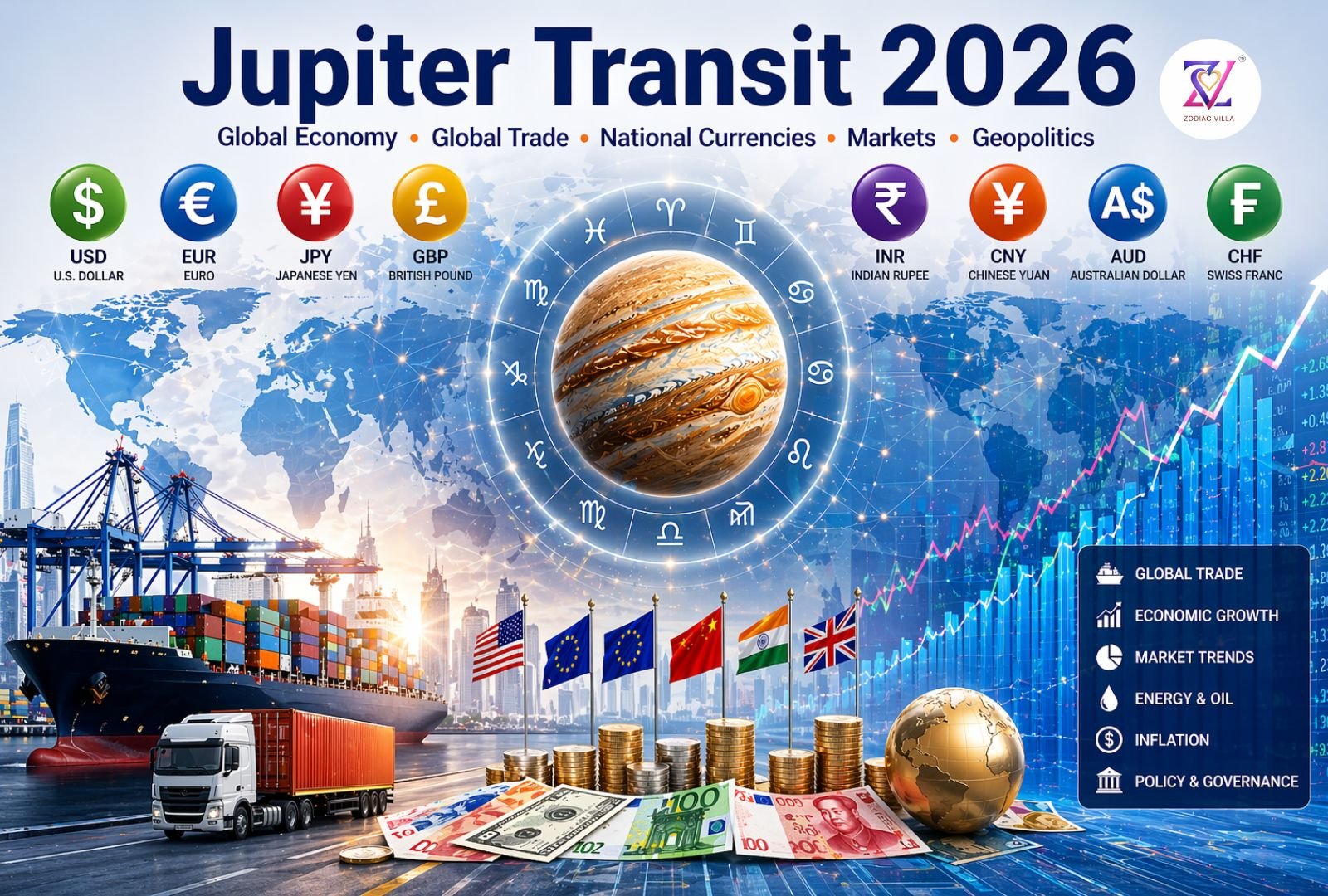
Jupiter in Cancer in 2026 may turn global focus toward borders, fuel, food, public safety, and emotional national priorities. This article explains how that transit may affect world politics, regional tensions, and the economic mood from June to December 2026.
At a Glance
- Jupiter in Cancer may push nations to protect homeland interests, resources, and public stability.
- The second half of 2026 may bring stronger focus on borders, energy routes, and domestic political pressure.
- The United States, Europe, Asia, and the Middle East may face different forms of security, trade, and narrative stress.
- The global economy may stay sensitive to oil, shipping, inflation, and geopolitical disruption.
Table of Contents
- Introduction
- Geopolitical and Regional Impacts
- United States & Near Locations
- European Union & Near Locations
- Asia – Middle East
- Probable Global Economic Outlook
- Astrologer’s Insight
- FAQs
- Key Takeaways
Introduction
From June to December 2026, the mundane tone changes in a way that deserves serious attention. Jupiter enters Cancer on 02 June 2026, its exaltation sign in Vedic astrology.
In mundane terms, this can turn focus toward homeland, shelter, family policy, food, fuel, border sentiment, public safety, emotional nationalism, and the psychological need for security. This is not a transit that speaks first through theory. It speaks through what nations must defend and what populations feel they cannot afford to lose.
“Some transits expand markets. This one tests what nations will protect when pressure reaches the home front.”
This 2026 phase becomes even more sensitive because Jupiter will also aspect Saturn in Pisces, which adds pressure through water routes, humanitarian strain, institutional burdens, maritime issues, and the emotional fatigue of prolonged uncertainty. The timing windows deepen the story.
Jupiter-Venus in Cancer can briefly support negotiation, soft diplomacy, relief efforts, and public sympathy. The Mercury retrograde period from 29 June to 23 July, moving from Cancer back into Gemini, raises the chance of revisions, media distortion, policy confusion, transport issues, and diplomatic miscommunication.
Then the tone grows louder. The Sun-Jupiter conjunction in Cancer can magnify state pride and leadership visibility. The 12 August solar eclipse in Cancer and the 28 August partial lunar eclipse in Aquarius may expose tension between domestic protection and collective systems.
In late 2026, Jupiter-Ketu and Mars-Ketu in Leo can push pride, power signaling, leadership ego, territorial messaging, and sudden displays of force.
This article covers the 2026 phase of Jupiter’s Cancer transit. The 2027 developments will be analyzed separately.
Recommended reading: Our earlier Jupiter Retrograde article was quite accurate, and many of the themes we discussed did play out later, so this new forecast deserves a careful read.
Geopolitical and Regional Impacts
The broad global pattern for the second half of 2026 is not merely “expansion.” It is defensive expansion under stress. Nations may try to secure home interests first and explain the cost later. That can mean stronger border language, a harder line on imports, maritime security moves, louder military signaling, and a greater use of emotional narratives to hold domestic support. The live backdrop already supports this reading. Shipping and insurance in and around the Strait of Hormuz have been hit hard during the Iran crisis. Oil briefly moved above $100 before easing, and the IMF has already warned that the global economy is operating in the shadow of war, with inflation risks still alive.
“This is not only a transit of prosperity. It is a transit of protection, memory, homeland, and national response under stress.”
So the deeper mundane message of Jupiter in Cancer is simple: governments may become more protective, populations may become more reactive, and policy will increasingly revolve around essentials. Food, fuel, housing, ports, migration, domestic industry, and public morale can become more politically sensitive than abstract growth narratives. This is where the transit becomes powerful.
United States & Near Locations
For the United States and near locations, the most realistic themes are political narrative warfare, trade protection, and border-linked pressure. So, the second half of 2026 can be a highly sensitive period for manipulated perception, distrust, and emotionally loaded campaign messaging. At the same time, North America is entering a serious trade review phase.
Under Jupiter in Cancer, the United States may lean harder into domestic protection language. Border security, industrial policy, supply chains, food inflation, and patriotic economic messaging can rise together. Mexico may continue to feel the strain of uncertainty across manufacturing and trade corridors. Canada may remain focused on preserving exemptions and reducing tariff damage. During June to August, expect negotiations, revisions, and messaging confusion. In August and September, expect more public theater, leadership optics, and emotionally charged rhetoric. In late October through early December, the tone can become sharper around sovereignty, legal disputes, campaign positioning, and diplomatic friction.
European Union & Near Locations
For the European Union and nearby regions, the strongest mundane themes are war finance, energy vulnerability, inflation fatigue, and institutional stress. Europe still carries the Ukraine burden financially and strategically, and the energy shock from the Middle East conflict has already darkened the macro outlook. So, the second half of 2026 give signals through higher energy prices, weaker confidence, and disrupted supply chains.
This suggests a Europe that may look outwardly disciplined but inwardly strained. Household costs, transport costs, defense readiness, and fiscal priorities can remain under pressure. Eastern Europe may stay alert to hard security risk. Western Europe may stay more absorbed in price pain, competitiveness, and political patience. Under Jupiter in Cancer, public tolerance for prolonged instability can weaken. During the year-ending period, under Ketu + Jupiter conjunction phase, leaders may feel pushed to demonstrate strength more visibly, especially if energy or cyber incidents rise again.
Asia – Middle East
This is the most intense regional zone for the second half of 2026. In Asia, maritime security remains a live theme. India is likely to handle this with care. So for Asia and the Middle East, Jupiter in Cancer points to resource security, domestic shielding, and public sensitivity.
For Asia and the Middle East, the second half of 2026 may bring stronger focus on territory, borders, strategic routes, resources, and national pride. Jupiter’s aspect on Saturn in Pisces may increase pressure around sea routes, oil, water-linked concerns, refugee strain, and cross-border instability. The Mercury retrograde phase may create confusion in diplomacy, transport, and policy messaging. The Cancer solar eclipse may expose weakness in domestic security or leadership response. Later, the Sun-Ketu, Jupiter-Ketu, and Mars-Ketu patterns in Leo can intensify pride-driven decisions, symbolic power moves, and sudden religious grouping. This is a phase where emotional reactions, prestige, and strategic control may become stronger than calm negotiation.
Probable Global Economic Outlook
The global economic outlook for June to December 2026 looks less like a clean recession story and more like an inflation-and-disruption story.
That means the likely winners may be energy resilience, defense, cybersecurity, logistics adaptation, and domestic infrastructure. The likely losers may be fuel-sensitive transport, import-dependent manufacturing, and any economy that assumes calm sea routes and cheap energy will return quickly. This transit does not deny growth. It changes the question. Growth in second half of 2026 may depend less on confidence and more on protection, supply stability, and the emotional stamina of nations under pressure.
Astrologer’s Insight
Jupiter in Cancer is not only about growth. It is about protected growth. In mundane astrology, this often means nations and people focus less on expansion and more on safety, stability, food, shelter, borders, and emotional security. Later, when Jupiter conjuncts with Ketu and Mars themes, pride and sudden reactions can rise. The wisest approach in late 2026 may be calm strategy over emotional impulse.
FAQs
- What does Jupiter entering Cancer mean in Vedic astrology?
Answer: Jupiter in Cancer is considered exalted, which means its positive qualities become stronger. This can bring greater focus on wisdom, protection, family matters, emotional healing, and long-term security. - Why is this transit important for world events?
Answer: In mundane astrology, Cancer relates to homeland, public mood, food, water, shelter, and borders. When Jupiter moves here, these themes may become more important in politics, economics, and regional decision-making. - Can this transit affect the global economy?
Answer: Yes, it may. The second half of 2026 could keep markets sensitive to oil prices, shipping routes, inflation, housing costs, and domestic policy decisions. - Is this transit positive or challenging?
Answer: It can be both. It supports healing, protection, and wise growth, but it can also increase emotional reactions, defensive politics, and pride-based decisions if handled poorly.
Curious how fate, free will, and timing truly work together in real life? Read “Destiny Is a Serious Matter—But Don’t Take It Too Seriously” for a deeper perspective.
Written by: Research Desk | Zodiac Villa